

Do you ever feel like you spend a small fortune on clothes, and still have nothing to wear? A capsule wardrobe can help you cut through the clutter, leaving a closet full of items that complement one another, express your unique stye, and are easy on the wallet!
I’d always liked the idea of a capsule wardrobe, for the cost effectiveness, space savings, and simplicity. Unfortunately, I wasn’t sure how to put one together, or even where to begin. After all, I’m not a professional stylist.
But, in an effort to level up my look (without breaking the bank) I researched the secret to building a timeless capsule wardrobe. And, thankfully, I found it!
Creating my capsule wardrobe was a monumental shift! It’s functional, comfortable, and chic. Given that it’s had such a positive impact on my budget, I decided I should share my 7-step formula.
Let’s dig in…
Step 1 – Pare Down, Eliminate What You Don’t Wear
The majority of people only wear about 20% of the clothes they own. That means 80% of what they have fits this category. To ensure you don’t just rebuild, it’s important to ask yourself why you’ve acquired so many items you don’t use.
Why Do Outfits Collect Dust?
Outfits hang around, taking up valuable real estate in our closets for a multitude of reasons:

You’re having trouble letting go of that sweater that Aunt Betty gave you ten years ago.
Although it’s itchy, two sizes two big, the color washes you out, and she’d never know if you got rid of it, you feel obligated to keep it.
Those jeans will fit again someday. It’s only been eight years since they did… That hideous bridesmaid dress, from your friend’s wedding two years ago…
it’s a souvenir.
Sure, some of your clothes are out of season, out of style, or just plain worn out, but you haven’t had a minute to clean out the closet.
You keep telling yourself that you don’t have time to get rid all of the items you never use, even though having them in the way probably adds ten minutes to your morning routine.
One of your shirts still has tags because it was bought on a whim. You were actually shopping for shoes for work when you looked up and saw it – the perfect shirt.
It was so fabulous that you didn’t even pause to consider what you’d wear it with. When you got home you realized it went with exactly zero things you own.

Now, you’re forced to decide if you should buy more things you don’t need, and shouldn’t be spending money on, to go with the cute shirt you never planned to buy. You’ve somehow managed to fall for the infamous impulse buy, once again.
Its Time to Let Go
Our “wardrobe clutter” gets in the way of finding those clothes that are worth wearing. It also may be a sign that we’re chasing trends, rather than sticking to the tried and true or wearing outfits that reflect our body shape and personality.
It’s time to get rid of the items that you’ve never worn, haven’t worn for a year, or are unlikely to wear in the near future.
The Simplicity Habit explains How to Be Ruthless When Decluttering Clothes.
Keeping the Clutter at Bay
It’s not enough to get rid of a few items, you need to make a commitment to keep your closet from becoming overrun with clothes again.
We have a tendency to fill space.
When we buy a bigger house, we fill it with furniture.
If we make more money, we spend it.
When there’s space available in our closet….
Capsule Wardrobe RULE #1
There are two things I’ve found extremely helpful in my efforts to keep my closet minimal, the first is a strict rule:
For each item that comes in, another must go out.
I’d read an article (or twenty) about minimalism. I was drawn to the idea, not only for the financial benefit, but also for the simplicity of it.
I appreciated the idea of having fewer choices. And, when my surroundings are sparser, I feel more centered.
Yet, there were two areas where I didn’t seem to subscribe to my usual “just enough, no more, no less” philosophy – clothing and books.
The day I decided I was ready to pare down my closet, I instituted my first rule:

I’d catch myself (usually while headed for the register with an article of clothing in hand) and stop to consider whether I was willing to donate something I owned to bring a new item home.
At least 90% of the time, the answer was “no”.
Although far less frequently, I do still buy clothes. Today, I’m a more intentional and strategic shopper.
This is true whether I’m replacing a worn-out item or trading in something less versatile for the skirt that can fill a gap, opening up a multitude of outfit options.
Capsule Wardrobe RULE #2
Be Willing to Spend More on Less.
This may seem counterintuitive – how will I save money by spending more? It works IF (and only if) you use that purchasing power to get high quality items, that are exactly what you want, and fit perfectly.
This doesn’t mean every item should cost a lot. In fact, all of your clothing could be inexpensive. You may, for instance, find everything you need on discount racks or at resale stores.
The intention is to make sure that saving money does not supersede getting the right thing, something that you’ll love to wear, and that will be used regularly for a long time.
This hit me after reading about the French approach to wardrobe design – “simple, high-quality basic items that are versatile, timeless, and classic.”
Rather than chasing trends, fast fashion, they select items that will always be stylish.

Not a RULE, But…
If you recall, I mentioned our tendency to fill empty space. You can help avoid this phenomenon by moving other things into your closet as you move clothing out.
My closet currently houses pillows, bedding, and beach towels. I’ve also relocated almost all of my hair and makeup products. Consequently, when I’m sitting at my vanity, primping, the closet doesn’t feel eerily empty.
Step 2 – Sift Through What’s Left
There’s no need to start from scratch. You’ll probably be surprised how many articles of clothing you already have that can be incorporated into your new capsule wardrobe.
Let’s find out…
Spread everything you still own out on your bed. If your wardrobe exceeds what you can lay across your bed, start draping, hanging, etc. Do whatever you have to do to be able to see every piece at once.
Separate your solid neutrals, they’ll be your base. Eventually, as you replace items, you’ll preference certain neutrals over others, but for now just be pleased if you have a foundation, something to branch out from.
You might be tempted to call it a day, to stop here, but:
Neutrals aren’t enough
The first time I minimized my wardrobe, I did it by cutting down to (nearly exclusively) denim and black.

Although it worked for a while, in the end, something was missing.
Don’t get me wrong, some of the outfits were fabulous! But, as a whole, my strictly neutral capsule wardrobe fell flat.
By eliminating almost every color, I’d lost the ability to complement, coordinate, and accent.
Although I didn’t realize it at the time, what I needed was colors that could live in harmony with one another.
Step 3 – Find Your Signature Color(s) & Establish Your Color Palette
I don’t understand why you’re
completely disregarding your signature color.
Serena, to Elle Woods, Legally Blonde
It’s much less difficult to pare down your outfits, while still having everything you need, when you adopt a color palette. You might find, like I did, that simply embracing the idea of a color palette doesn’t make choosing the colors any easier.
Which colors would be included and excluded felt like an important decision, since I was committed to finding ways to pair, blend, and layer them.
Sometimes it’s helpful to have specific boundaries or at least suggested amounts. More prescriptive capsule wardrobes stipulate exactly how many items you should have (30-40) and also the number of base (2-5), complementary (2-5), and accent colors (2-5) you should incorporate.
Pro Tip
If you use more colors in one area (4 neutrals),
reduce other areas (2 complements, 2 accents).
The 333 challenge asks people to only wear 33 clothing articles for the next 3 months. Quite a few people who restrict themselves in this way find it liberating. Often, they find embracing the limitations sparks creativity, increases resourcefulness, and inspires innovation.
Once I decided to reincorporate color, I appreciated having some leeway, especially in the beginning. Size wise, I’m more in line with Style Bee’s capsule wardrobe, which is built from a 50 piece closet.
If you prefer to choose from pre-defined color options, take a look at Anuschka Rees’ 36 sample palettes.
As I mentioned earlier, I found it easiest to begin with:
Neutrals (Base, Support)
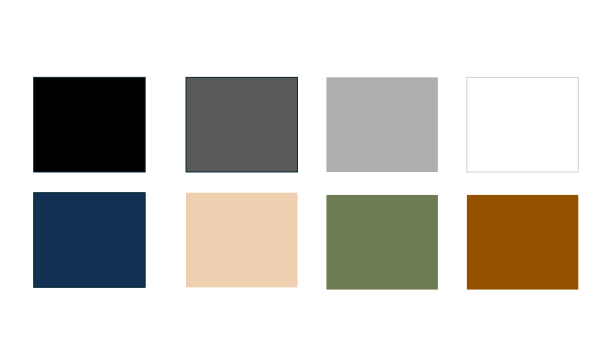
I have two main neutral colors: black and charcoal grey.
Occasionally I’ve decided to add a third. It’s never beige or brown, since that would be straying too far from the first two. For me, white, or a lighter variation of grey makes more sense.
I do own one pairs of jeans, but since I wear them so infrequently, I don’t include them in my color palette.
Something I’ve only considered recently is that deciding whether to use neutrals (predominantly) for either tops or bottoms, is a good way to create greater versatility with fewer items.
There’s some debate as to whether patterns, if they contain only neutral colors, should be counted as part of your base. Personally, I lean toward only counting solid articles in my base.
Before you select your main colors, it’s helpful to determine your season:
Conduct a seasonAl Color Analysis
There are four main color seasons: spring, summer, autumn, and winter.
They can be divided further, into 12 subcategories:
- Light Spring
- Clear Spring
- Warm Spring
- Light Summer
- Soft Summer
- Cool Summer
- Soft Autumn
- Warm Autumn
- Deep Autumn
- Clear Winter
- Cool Winter
- Deep Winter
Laurie Loo’s site has a Seasonal Color Analysis Quiz that assesses what will look best with the undertone found in your eyes, skin, and hair.
I’m a winter. Because I have cool undertones, I look better in sharp colors (rather than pastels) and silver (as opposed to gold) jewelry.
Since I have quite a bit of contrast between my hair and skin, and my eyes aren’t as dark as my hair, I’m a clear winter. Those with less contrast look fantastic in colors that are less saturated.
Choosing Your Main (Complementary) Colors
The simplest, and least expensive, way to select the main colors for your capsule wardrobe is to choose ones that are already found frequently in your closet.
Another method is to look through magazines, or other images, marking all of the outfits that stand out, that you’re drawn to.
If you use this method, it’s important to also try the colors on. This will ensure that they’ll actually work for you, not just in theory, but also in the real world.
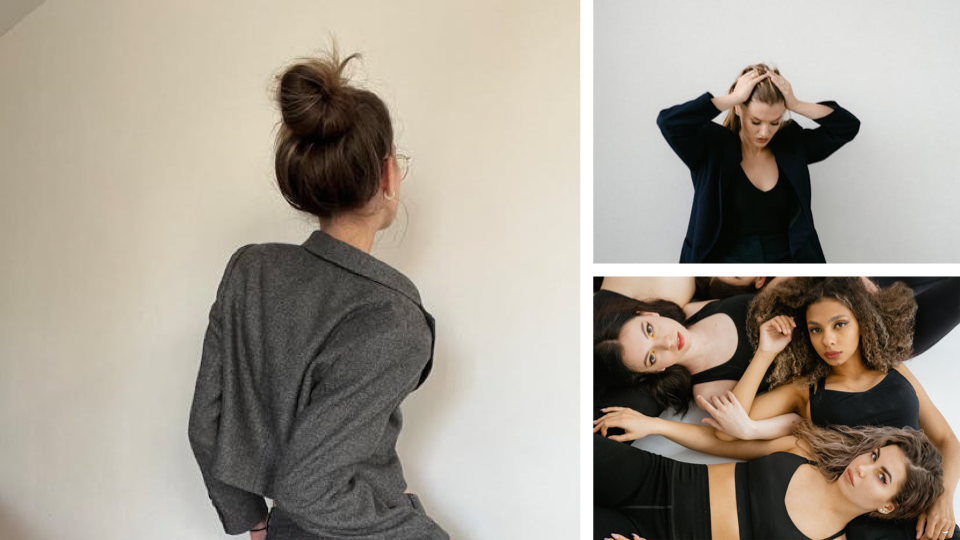
It’s important to feel confident in your clothing, to love what you wear!
When in doubt, go with your gut, let your instincts guide you. Sure, there are plenty of experts out there who can help you determine which colors to wear, but in the end, your opinion is the one that matters the most.
SelEcting Accent (statement) Colors
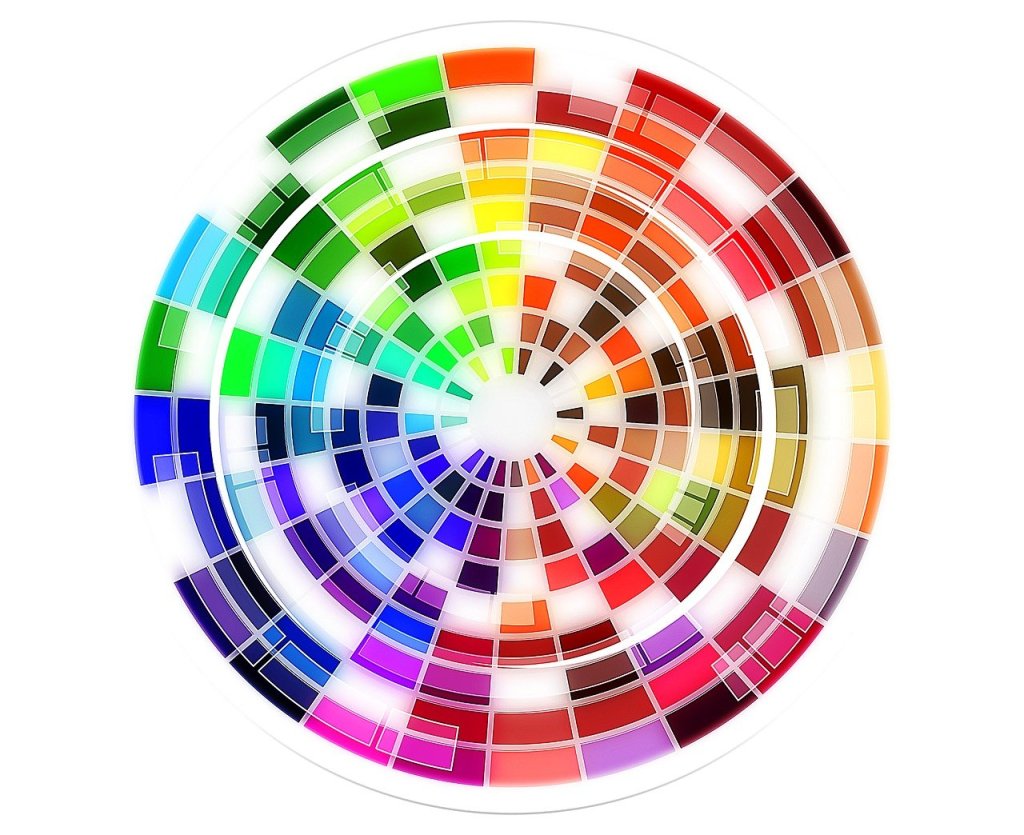
Your accent colors should harmonize. This will increase versatility. The idea is to buy things in a way that allows for mixing and matching. If none of the colors in your closet clash, every item goes with the others, the potential pairings increase exponentially.
Three factors that can be used to find colors that blend well are:

Analogous – next to one another on the color wheel
(ex: blue and green, orange and red)
Complementary – across from one another on the color wheel
(ex: purple and yellow, blue and orange)
Monochromatic – tints, shades, and tones of a single color
(ex: plum, lilac, and lavender)
Patterns & Texture
Add patterns sparingly, to provide a finishing touch.
Think of texture as a way to add variety, where you would typically use patterns.
Determining which colors will work for you is the key to finding your own style, rather than shifting your palette every season and your lines every year, based on what’s currently trending.
Tailoring these elements to your taste and preference is, ultimately, what will take you from trendy to timeless.
Pro Tip
The 60/30/10 rule, used in interior design, can also be applied in fashion. Limit your outfits to three colors, or less – one dominant (60%), one secondary (30%), and one highlight (10%).
Let’s explore another essential component:
Step 4 – Learn How to Use Body Shape to Guide Clothing Selection
If you understand how to work with your body shape, it’ll be much easier to assemble a capsule wardrobe.
There are five main female body types:
- Apple (Oval)
- Hourglass (X)
- Inverted Triangle
- Pear (Spoon, Triangle)
- Rectangle
Inch Calculator has a Body Shape Calculator, which uses shoulder, bust, waist, and hip measurement to ascertain the category you fall into.
Generally speaking, clothing suggestions based on figure are used to create the illusion of greater symmetry, or to draw attention toward certain areas and away from others.

Pro Tip
The rule of thirds is used in architecture, photography, art, and film. In fashion it translates to breaking your outfit line in a way that creates two unequal parts (with a 1/3 and 2/3 ratio). We perceive this proportion as dynamic and visually appealing.
Here’s the Cliff Notes of form, followed by a garment recommendation.
Apple
- Waist measurement exceeds bust and hip measurements
- Wear clothing that isn’t too tight and doesn’t break at the waist
- Kit and Kaboodle has a great guide for apples
Hourglass
- Similar bust and hip measurements, defined waist
- Choose items that highlight your waist
- A comprehensive guide for the hourglass can be found on The Concept Wardrobe’s site
Inverted Triangle
- Bust wider than hips
- Wear clothes that accentuate your hips
- I like Gabrielle Arruda’s guide for inverted triangles
Pear
- Hips wider than bust
- Assemble outfits that draw attention toward the upper body
- Isabella has a video that covers the ins and outs of dressing as a pear
Rectangle
- Similar bust and waist measurements, waist isn’t well-defined
- Use belts to create the illusion of a tapered waistline
- Visit Everyday Style for an in-depth guide for rectangles
Knowing how to dress your body type is a
game-changing skill when it comes to building a wardrobe you love. Understanding it not only makes getting dressed fun and easy
but it will save you time, money and sanity.
Megan Kristel, The Well Dressed Life
Step 5 – Increase Versatility (This is Vital)
There’s one thing everyone should be looking for, regardless of body shape or color scheme – versatility. The more adaptable each article of clothing in your closet is, the fewer items you’ll need.
Before you purchase something new for your closet, ask yourself these questions:
- Can I layer with this?
- Could I wear it across multiple seasons?

- Does this go with at least five things I already own?
- Depending on how it’s paired, could this cut across multiple dress codes?
(ex: casual, business casual, semi-formal, formal, etc.)
- Is it functional, will it do all of the wonderful things I like to do?
- Is this timeless, or part of a passing trend?
- For shirts – does it look good tucked and untucked?
- For pants – can they be worn with heals or flats? How about gym shoes?
An added consideration, that is more directly related to finances, is – can I wash it at home? One way to reduce expenses is to avoid clothing that requires dry cleaning, or another form of specialized care.
Step 6 – Realize that the Most Timeless Style is One That’s Unique to You
So, how do you go about creating a style that suits your personality?
New York-based stylist Allison Bornstein, author of Wear It Well: Reclaim Your Closet and Rediscover the Joy of Getting Dressed, introduced the three-word method to simplifying our wardrobes, while adding more of our own flare.
Bornstein told Vogue, in an interview, that she’d realized that:
A lot of people didn’t necessarily have the language to define their style […] As a result, they were buying a ton of shit and trying out a bunch of different trends, without really taking the time to pause and understand: ‘Who am I? What do I like? Why do I like it? And how can I cultivate a style that feels uniquely me?’
How To Streamline Your Wardrobe Using The Three-Word Method
Bornstein provides guidelines for selecting each word:
The 1st Word Should Be Practical
What’s in your closet? Stand in it and try to sum up what you see, using a single word (or two).
If you’re struggling, try focusing on those outfits you wear most frequently. It may help to bring in a fresh pair of eyes, try asking a few people who see you regularly how they would sum up your attire.
The 2nd Word Should Be aspirationaL
If money was no object, everything you tried on fit perfectly, and you lived next to a store that had one of every garment ever made – what would you be wearing?
If you’re struggling, think of a celebrity, character, or actual person who you think of as a fabulous dresser.
Does someone come to mind immediately?

If not, go pile through some pictures, save the ones you’re drawn to. What do they have in common? What word (or two) would you use to describe them?
The 3rd Word Should Be Emotional
How do you want to feel in your clothes? (perhaps cozy, edgy, or confident)
If you’re struggling with word #3, consider whether any of these descriptions resonate:
- Bold
- Bright
- Elegant
- Fearless
- Feminine
- Flirty
- Glamorous
- Mature
- Outgoing
- Playful
- Powerful
- Sophisticated
The psychology of clothing is complex and taps into culture, symbolism, neuroscience, sexuality and many more aspects of the human experience. Fashion and clothing influences behavior in multiple ways; our perception of ourselves, how others react to us, our confidence and self-esteem.
Psychology of clothes: what you wear changes the way you think
Before you finalize your words, I have a final suggestion. Describe your personality in three words.

Now, compare your personality words to your attire words, are they complementary, or do they clash?
If they conflict, your current or desired wardrobe may not align with your personality.
If the two sets of words suit one another, harmonize – congratulations! You have discovered another way to assess new articles of clothing!
The final question is, can you find items that meet ALL of these criteria?
Step 7 – Make Sure Your Items Check Every Box
Those things you buy, moving forward should:
- Fit your budget
- Align with your color palette
- Compliment your body shape
- Be timeless and versatile
- Be tailored to your “fashion personality”
When you’re building a capsule wardrobe, “okay” no longer cuts it.
Each piece needs to be THE item. When you set the bar this high, those things you do bring home are going to be the perfect fit!
Don’t settle! Living on less, to invest in your future, doesn’t have to mean sacrificing today.
Get the look you want for a price you can afford.
(and declutter your closet in the process)
Subscribe for practical insights on money and meaning – delivered to your inbox.
What to Read Next
Ready for more inspiration, start here:
Digital, Financial, and Nutritional Detox: Reclaim Your Life
 penniesandpassion.com